This function uses a kd-tree to find the fixed radius nearest neighbors (including distances) fast.
Usage
frNN(
  x,
  eps,
  query = NULL,
  sort = TRUE,
  search = "kdtree",
  bucketSize = 10,
  splitRule = "suggest",
  approx = 0
)

# S3 method for class 'frNN'
sort(x, decreasing = FALSE, ...)

# S3 method for class 'frNN'
adjacencylist(x, ...)

# S3 method for class 'frNN'
print(x, ...)
Arguments
- x
a data matrix, a dist object or a frNN object.
- eps
neighbors radius.
- query
a data matrix with the points to query. If query is not specified, the NN for all the points in
xis returned. If query is specified thenxneeds to be a data matrix.- sort
sort the neighbors by distance? This is expensive and can be done later using
sort().- search
nearest neighbor search strategy (one of
"kdtree","linear"or"dist").- bucketSize
max size of the kd-tree leafs.
- splitRule
rule to split the kd-tree. One of
"STD","MIDPT","FAIR","SL_MIDPT","SL_FAIR"or"SUGGEST"(SL stands for sliding)."SUGGEST"uses ANNs best guess.- approx
a positive number useed for approximate nearest neighbors. All NN up to a distance of a factor of
1 + approxeps may be used. Some actual NN may be omitted leading to spurious clusters and noise points. However, the algorithm will enjoy a significant speedup.- decreasing
sort in decreasing order?
- ...
further arguments
Value
frNN() returns an object of class frNN (subclass of
NN) containing a list with the following components:
- id
a list of integer vectors. Each vector contains the ids (row numbers) of the fixed radius nearest neighbors.
- dist
a list with distances (same structure as
id).- eps
neighborhood radius
epsthat was used.- metric
used distance metric.
adjacencylist() returns a list with one entry per data point in x. Each entry
contains the id of the nearest neighbors.
Details
If x is specified as a data matrix, then Euclidean distances and fast
nearest neighbor lookup using a kd-tree are used.
To create a frNN object from scratch, you need to supply at least the
elements id with a list of integer vectors with the nearest neighbor
ids for each point and eps (see below).
Self-matches: Self-matches are not returned!
References
David M. Mount and Sunil Arya (2010). ANN: A Library for Approximate Nearest Neighbor Searching, http://www.cs.umd.edu/~mount/ANN/.
Examples
data(iris)
x <- iris[, -5]
# Example 1: Find fixed radius nearest neighbors for each point
nn <- frNN(x, eps = .5)
nn
#> fixed radius nearest neighbors for 150 objects (eps=0.5).
#> Distance metric: euclidean
#>
#> Available fields: dist, id, eps, metric, sort
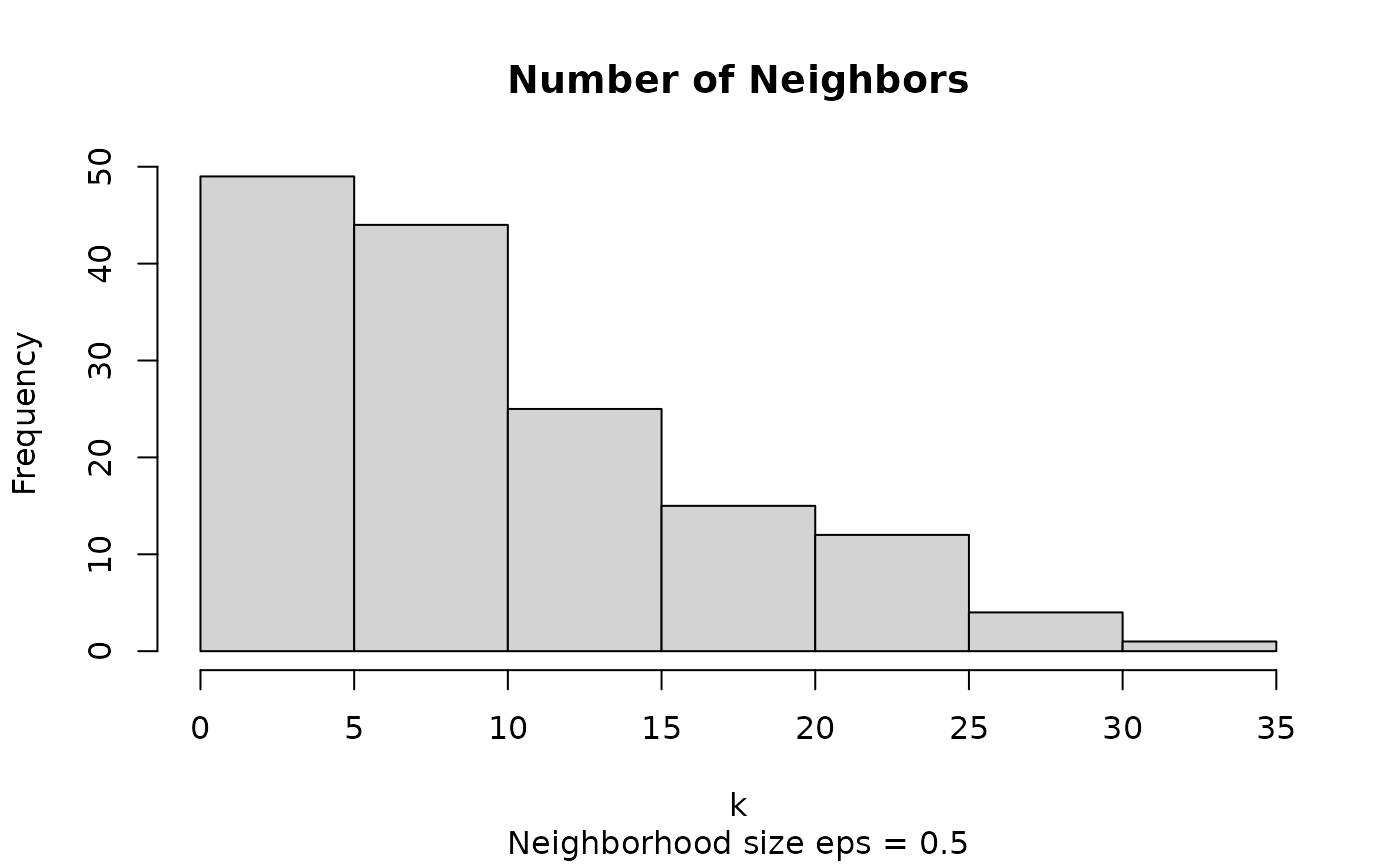
# Number of neighbors
hist(lengths(adjacencylist(nn)),
xlab = "k", main="Number of Neighbors",
sub = paste("Neighborhood size eps =", nn$eps))
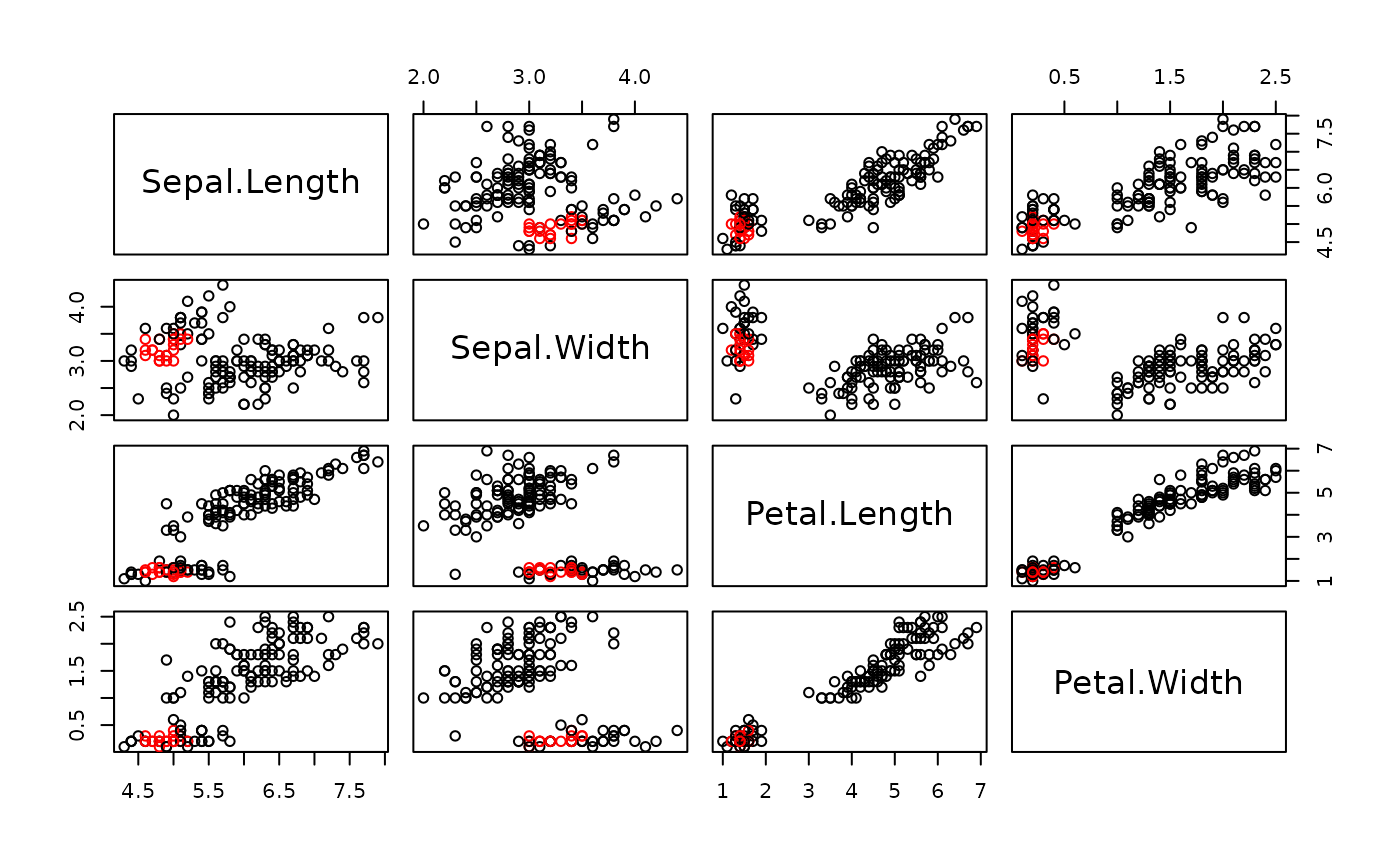
 # Explore neighbors of point i = 10
i <- 10
nn$id[[i]]
#> [1] 35 2 31 13 26 50 30 46 3 4 8 36 12 48 40 29 27 1 7 18 41
nn$dist[[i]]
#> [1] 0.1000000 0.1732051 0.1732051 0.1732051 0.2000000 0.2645751 0.2645751
#> [8] 0.2645751 0.3162278 0.3162278 0.3316625 0.3464102 0.3464102 0.3464102
#> [15] 0.3741657 0.4472136 0.4472136 0.4690416 0.4795832 0.5000000 0.5000000
plot(x, col = ifelse(seq_len(nrow(iris)) %in% nn$id[[i]], "red", "black"))
# Explore neighbors of point i = 10
i <- 10
nn$id[[i]]
#> [1] 35 2 31 13 26 50 30 46 3 4 8 36 12 48 40 29 27 1 7 18 41
nn$dist[[i]]
#> [1] 0.1000000 0.1732051 0.1732051 0.1732051 0.2000000 0.2645751 0.2645751
#> [8] 0.2645751 0.3162278 0.3162278 0.3316625 0.3464102 0.3464102 0.3464102
#> [15] 0.3741657 0.4472136 0.4472136 0.4690416 0.4795832 0.5000000 0.5000000
plot(x, col = ifelse(seq_len(nrow(iris)) %in% nn$id[[i]], "red", "black"))
 # get an adjacency list
head(adjacencylist(nn))
#> [[1]]
#> [1] 18 5 40 28 29 41 8 50 38 22 49 27 20 47 36 12 11 32 37 21 35 44 10 24
#>
#> [[2]]
#> [1] 35 46 13 10 26 31 36 3 50 4 30 48 8 40 12 29 27
#>
#> [[3]]
#> [1] 48 4 7 13 46 43 30 35 2 36 10 50 31 39 12 8 41 9 38 26 40
#>
#> [[4]]
#> [1] 48 30 31 3 13 46 39 43 9 35 10 7 2 12 26 50
#>
#> [[5]]
#> [1] 38 1 18 41 8 40 28 20 22 29 47 50 49 27 12 11 36 44 7
#>
#> [[6]]
#> [1] 19 11 49 45 20 47 17 22 33 34
#>
# plot the fixed radius neighbors (and then reduced to a radius of .3)
plot(nn, x)
# get an adjacency list
head(adjacencylist(nn))
#> [[1]]
#> [1] 18 5 40 28 29 41 8 50 38 22 49 27 20 47 36 12 11 32 37 21 35 44 10 24
#>
#> [[2]]
#> [1] 35 46 13 10 26 31 36 3 50 4 30 48 8 40 12 29 27
#>
#> [[3]]
#> [1] 48 4 7 13 46 43 30 35 2 36 10 50 31 39 12 8 41 9 38 26 40
#>
#> [[4]]
#> [1] 48 30 31 3 13 46 39 43 9 35 10 7 2 12 26 50
#>
#> [[5]]
#> [1] 38 1 18 41 8 40 28 20 22 29 47 50 49 27 12 11 36 44 7
#>
#> [[6]]
#> [1] 19 11 49 45 20 47 17 22 33 34
#>
# plot the fixed radius neighbors (and then reduced to a radius of .3)
plot(nn, x)
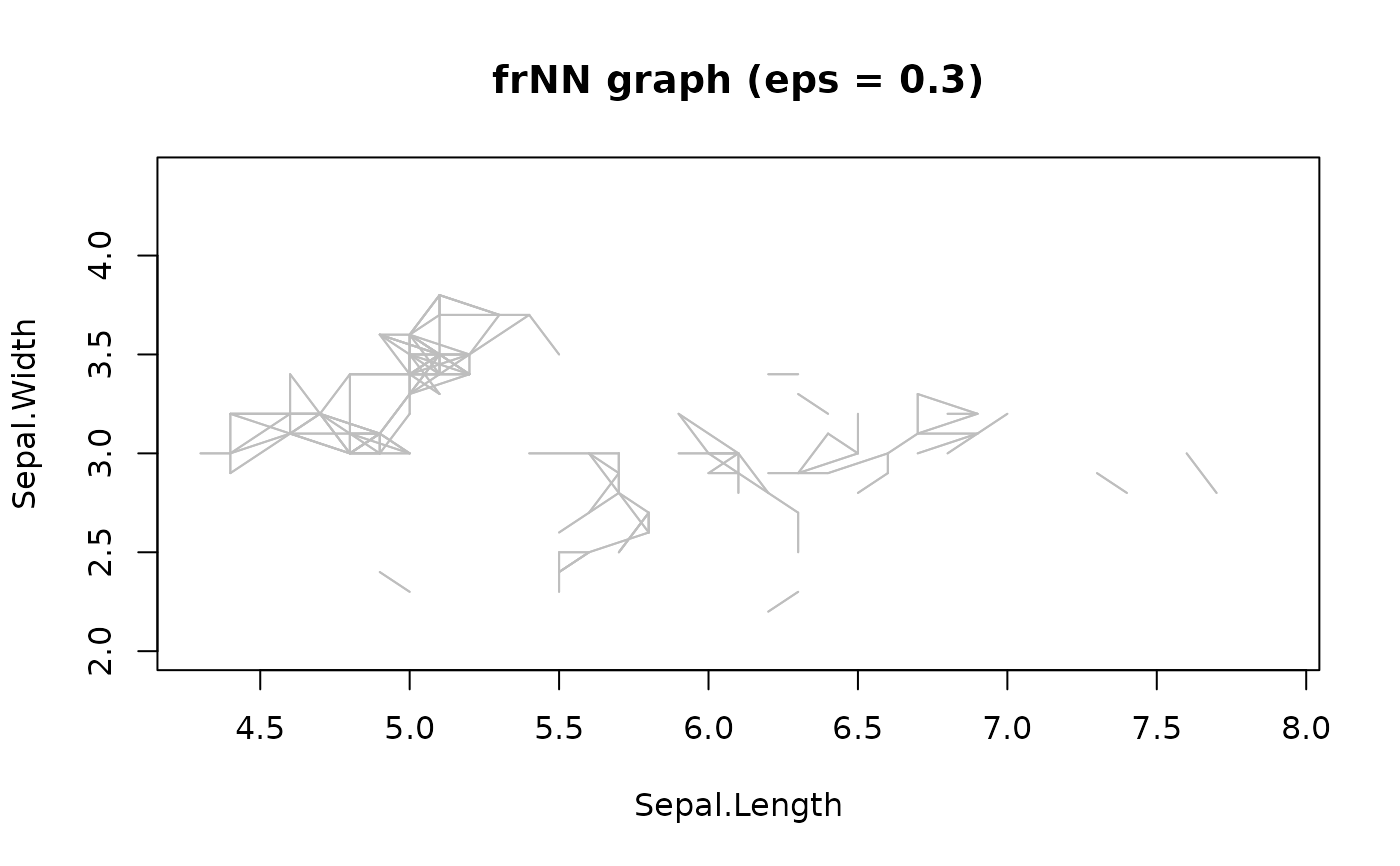
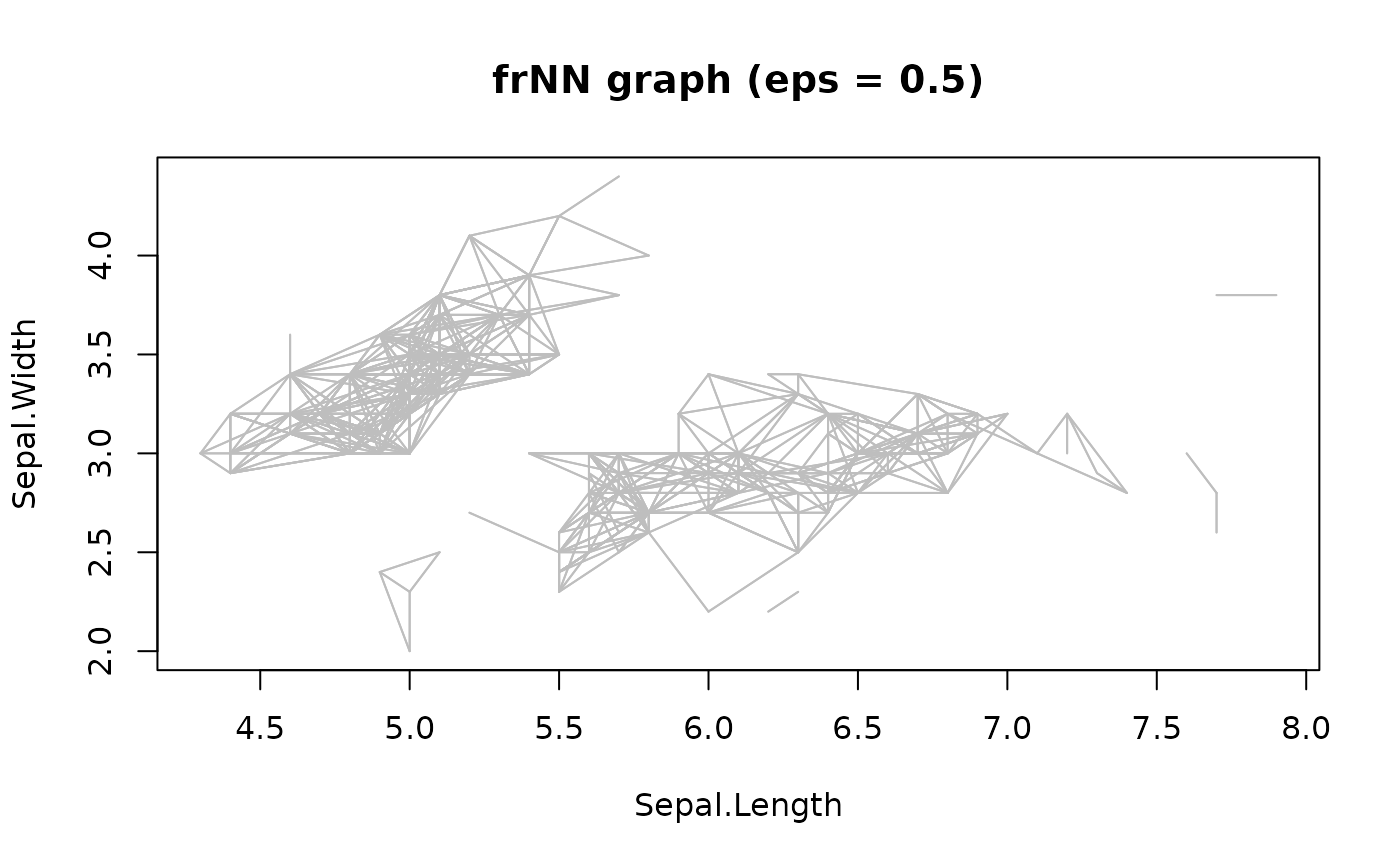 plot(frNN(nn, eps = .3), x)
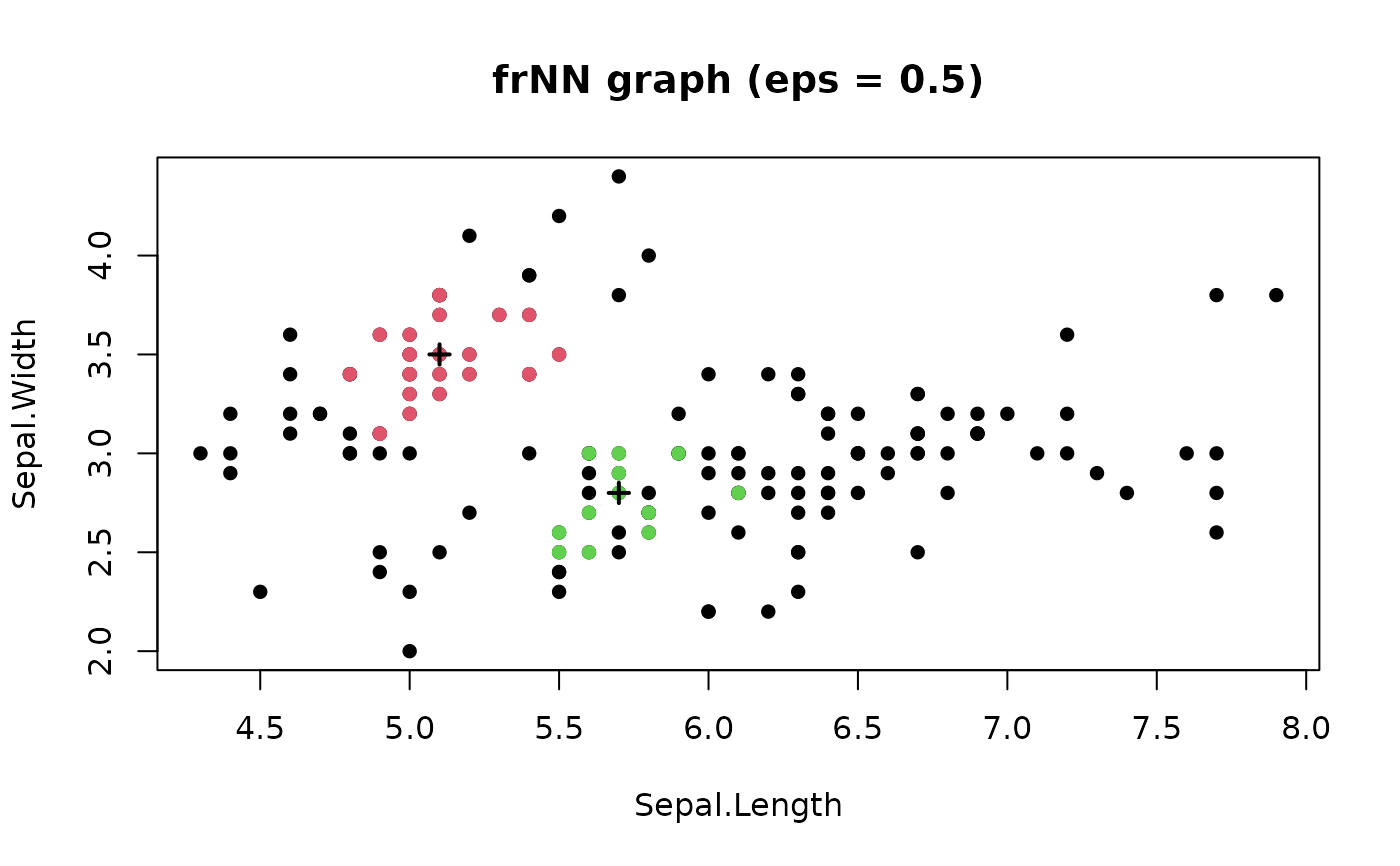
 ## Example 2: find fixed-radius NN for query points
q <- x[c(1,100),]
nn <- frNN(x, eps = .5, query = q)
plot(nn, x, col = "grey")
points(q, pch = 3, lwd = 2)
## Example 2: find fixed-radius NN for query points
q <- x[c(1,100),]
nn <- frNN(x, eps = .5, query = q)
plot(nn, x, col = "grey")
points(q, pch = 3, lwd = 2)